Posts

See 9 tips on how to open a food business

  Today, according to the Food Safety and Standards Authority of India Service India (FSSAI), the food service market has an estimated value of R $ 60 billion in revenue, generating more than 220 thousand jobs in India. And the estimate is that, in 2019, the sector will reach the value of R $ 230 billion.   Well, there are several reasons why we came to this result. First, the eating habits of Indian have undergone major changes in recent years.   In addition, the increase in the urban population, the level of education, the purchasing power and the participation of women in the labor market were also relevant for the snack bar and restaurant market.   And there was also an increase in the income of Indian, the sophistication of their habits, and a trend that seems to be here to stay: culinary programs have awakened people's attention to new aspects of food.   So many favorable factors, however, do not mean that maintaining a business in the food busines...
Solid waste treatment: what technologies are used?

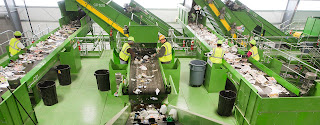
  In order to carry out the correct treatment of waste, it is necessary to make use of appropriate technologies. Fortunately, with recent innovations, this is not a problem. We have the necessary resources at our disposal, just look for the right methods and companies.   Although the population does not always know, it is important to be aware of the equipment used to treat waste. It is also essential to learn about the Solid Waste Policy , in addition to the Solid Waste Policies of states, municipalities and the Federal District that need to be compatible with environmental legislation.   Solid waste can be: domestic, civil construction, hospital, industrial, radioactive, electronic, agricultural. Find out more about the technologies used in the treatment of solid waste Management !   The characteristics of biochemical treatment   In the treatment of solid residues of biochemical character, the matter is usually decomposed by bacteria and fungi. Dependi...

Waste Co processing: how does it work?

  There are different types of waste treatment. Some of them use furnaces to treat more dangerous materials, such as incineration and co-processing. It is about using high temperatures to eliminate or transform the waste into energy and raw material.   In the case of incineration, the material is almost completely disposed of. In the case of co-processing, there is a transformation. It is a sustainable solution that integrates the discarded material into the production cycle of cement companies.   Read also: Are you looking for Original vintage signs Waste coprocessing   The waste coprocessing is a solution that replaces partially the fuel feeding furnaces which transform clay and limestone in the clinker, the raw material for cement. Thus, waste is converted into energy that generates raw material for the production of cement.   Combustion in Coprocessing   Combustion in Coprocessing is the fundamental reaction that promotes the transformation ...

Waste management: how to find the best cost-benefit?

The correct disposal of waste by companies is a fundamental point in its management. When the waste receives the most appropriate treatment and destination, negative impacts on the environment are minimized or even eliminated. Therefore, waste generators need specialized companies to provide support in this area.   The waste management should be as effective as possible. Thus, the company guarantees sustainable processes, traceability and, legal assistance, without creating problems with inspection agencies. In addition, its good reputation is consolidated in the market, before consumers of products and / or services.   All of these points must be analyzed when looking for the best cost-benefit in waste management. Understand better below!   Is the outsourced company authorized to carry out the processes?   To carry out the treatment and disposal of waste, specialized companies need specific authorization and licenses. The licensing process by Organs compete...

What is and what is the importance of the waste management plan?

Better known as PGRS (Plant Growth Regulators), the Waste Management Plan is an extremely important document. It is he who identifies and defines the environmentally correct destination of different types of materials discarded by industries, businesses and consumers in general.   In addition to protecting people's health against diseases caused by infectious agents and urban pests, the waste management plan also protects the environment, reduces waste and enhances corporate profits. Do you want to know more about it? Then follow the article below.   Who is the Waste Management Plan for? Civil construction companies; Commercial and service establishments that generate hazardous waste or waste not reached by household collection; Health services; Mining companies; Industries; Companies of agrosilvopastoral activities; Waste generators from public basic sanitation services; Companies that produce waste from transport services (ports, airports, customs, road and rail termin...

WHAT ARE HAZARDOUS WASTE?

Image
  Waste management is a challenging task, especially when it involves the management of hazardous waste.   Hazardous wastes are those that, as the name indicates, offer dangerousness, risk to health and / or the environment.   To be classified as I, the waste must have at least one of the following characteristics: flammability, corrosivity, reactivity, toxicity, pathogen city   THE 3 TYPES OF HAZARDOUS WASTE:   Biological Waste   They are wastes that contain infectious agents. Like viruses, bacteria, protozoa, fungi, bacilli. The biological risk occurs through pathogenic microorganisms that, in contact with other living beings, can cause innumerable diseases. Many professional activities favor contact with such risks. This is the case of the food industries, hospitals, public cleaning (garbage collection), laboratories, etc.   Tips for the correct disposal of this waste: Cotton, gauze, procedure gloves, tape and bandages should be dispose...

Waste classification: what should we know about the topic?

Image
  Over the past few decades and the increase in technology, human beings have increased their waste production. However, all of that volume cannot be discarded in any way. To solve this problem, there is characterization and classification of residues, which aim to allocate each material to its most appropriate cycle, without harming the environment.   It is the physical, chemical and biological identification of the material of which the waste is composed. Based on their composition, they are identified and separated, each one being directed to a solution, for example, recycling, incineration or landfill.   Industrialization, in addition to bringing its benefits to humanity, also offers its consequences and losses. The great exploitation of resources turns what was once a raw material into a product, and this, in turn, when it reaches its useful life, ends up becoming waste and being replaced by a new one.   Sorting the waste correctly is an important task. Ther...

Hazardous waste, good practices when managing it to stop climate change.

  In cities like Delhi, more than one hundred thousand tons of domestic garbage are produced every day, more or less 37 million tons per year of urban solid waste thrown in landfills, according to Greenpeace, a change in the management of hazardous waste at an industrial level is necessary, to slow down climate change , reduce their production and at the same time recover those generated. In this city, the treatment that garbage receives is reduced to leaving it in landfills or being incinerated, this generates serious damage to the Environment and therefore to the health of human beings, animals and vegetation, deteriorating life in general. These practices when it comes to disposing of waste, either by decomposing it, burying it or simply leaving it in a landfill, causes the emission of thousands of chemical, harmful and dangerous compounds that filter into the air, soils or the water, endangering all forms of life on the planet. On the other hand, there are a multitude of ...

Waste management: understand how to apply it in industry

Image
  Correct management of solid waste is an important step in an industry's routine. With the most diverse daily activities, it is common that the amount of discarded materials is significant and that this has a direct influence on the environment.   Therefore, studying what are the most appropriate actions to minimize these impacts has a positive contribution for the company in several aspects , such as economy, image strengthening and, mainly, reduction of damage to the ecosystem.   But, a question that may arise is: how to apply an efficient waste management in the industry? After all, joining viability to applied strategies is not always an easy task.   With that in mind, we have separated some suggestions that will help you have good results with management. Continue reading the post!   What are the benefits of waste management?   There are several reasons for you to invest in waste management practices without negatively impacting the industry'...

How to save hazardous waste?

Image
  Hazardous waste is a source of risk for the environment and health. These wastes, generated from industrial, agricultural, service and even domestic activities, constitute an environmental issue of special importance due to their volume (increasingly increasing) and as a consequence of the economic development process and its characteristics. .   Its problems are associated with various causes such as, for example, the presence of impurities in materials, low process technology, deficiencies in operational practices or the characteristics of products and substances at the end of their useful life, among others. Thus, the producer or manager of hazardous waste is obliged to keep the waste stored in adequate hygiene and safety conditions while they are in their possession.   The maximum duration of storage will be six months (in exceptional cases, the competent body of the Autonomous Communities where such storage is carried out, for duly justified reasons and provid...

Setting up a company in the United States from India: how to get started?

Image
  The United States has always attracted entrepreneurs around the world, who see it as a particularly favorable environment for entrepreneurship. The spirit of creation and conquest of new markets so characteristic of the United States encourages these entrepreneurs to attempt the adventure of creating a business on American soil. With more than 320k inhabitants, the development prospects for companies are immense. Entrepreneurs who have embarked on it continually praise the administrative flexibility and business opportunities offered by this country compared to other countries like India, although the situation is continuously improving. However, while launching a business in the United States may seem easy, it is essential to be well prepared so that you do not experience failure. If you also want to immigrate to Uncle Sam's country to set up your business there or simply to test the marketing of your products and / or services in this market, we suggest that you read the ...